Home


Menu

Close

Generative AI Programs Depend on Ethical Data to Earn User Trust
Published:
June 29, 2026
Introduction
Generative AI programs are changing how we work, create, and solve problems. From writing emails to designing images and even creating apps with AI, these tools seem almost like magic ai. But behind the excitement lies a serious challenge: trust. Many businesses and users worry about data privacy, accuracy, and ethics.

The truth is, most generative AI platforms rely on data scraped from the public internet. This creates what experts call an "AI bottleneck." Without enough permission-based private data, models cannot train as accurately or ethically as they should. The result? AI that sometimes gets things wrong or reflects biases in its training material.
This article gives you a research-backed look at how generative AI programs work today. We will explore their capabilities, real-world applications, and what it takes to deploy them responsibly. We will also look at why ethical data practices are the foundation for reliable AI.
As explained in this overview of top generative AI models in 2026, models like GPT-4o and Gemini are leading the way. But even the best model is only as good as the data behind it. One key challenge is the shortage of high-quality, permission-based data. As we discuss in our guide on ethical data analysis builds trust in AI, the quality of training data directly affects model reliability.
The demand for ethical, permission-based data has never been greater. Companies that invest in responsible data practices will lead the next wave of innovation. In the sections ahead, we break down the architecture behind these systems, the different types of models, and the steps organizations must take to avoid common pitfalls. By the end, you will understand not just what generative AI can do, but how to use it in a way that respects people's data and builds lasting trust.
What Are Generative AI Programs?
You have probably heard people call generative AI "magic ai." It can write poems, create artwork, and even help you create apps with AI. But behind the buzz, there is a real technology powering all of that. Understanding how these tools work is the first step to using them wisely.
Generative AI programs are a type of artificial intelligence that creates new content. Instead of just sorting data or making predictions, they generate original text, images, music, and code. You give them a simple prompt, and they produce something that feels fresh and human-like.
How These Programs Create New Content
These programs rely on special structures called models. The most common types include large language models (LLMs), generative adversarial networks (GANs), and diffusion models.
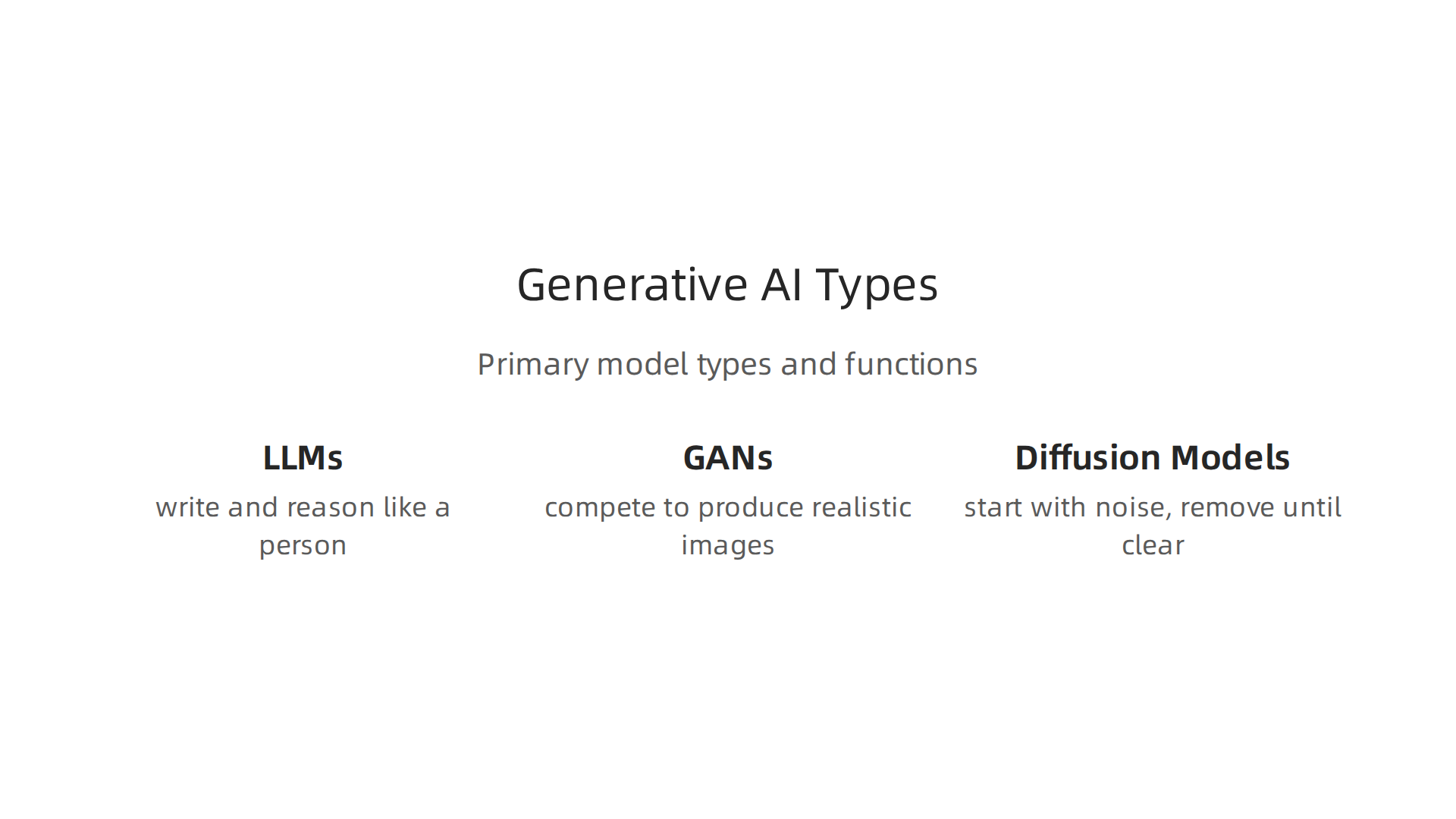
LLMs like GPT-4o and Claude learn from billions of words to write and reason like a person.
GANs use two neural networks that compete with each other to produce incredibly realistic images. Diffusion models, such as Stable Diffusion, start with random noise and slowly remove it until a clear picture appears.
As explained in this overview of generative AI architecture, models, and applications, each type has its own strengths and is used for different tasks.
How Generative AI Differs from Traditional AI
Traditional AI is built for tasks like identifying spam, classifying photos, or predicting next month's sales. It takes input and outputs a label or a number. Generative AI flips that around. You feed it a few words, and it produces a long, detailed response. That makes it powerful but also harder to control. A small mistake in the prompt can lead to outputs that are wrong or biased.
Why Training Data Matters
For generative AI programs to work well, they need enormous amounts of training data. That data often comes from the public internet, which includes errors, outdated facts, private details, and even hateful content. When a model learns from bad data, it can spread misinformation or reinforce harmful stereotypes. This is where ethical risks become serious.
Knowing the sources of training data helps you spot potential problems. If you want to dive deeper into building trustworthy systems, take a look at how to build apps with AI that earn trust through ethical data annotation. It explains the steps developers can take to keep AI honest and fair.
The Big Picture
Generative AI programs are not magic. They are powerful tools built on models that learn from data. The more you understand how they work, the better you can decide when to trust them. In the next section, we will look at real-world applications and what it takes to deploy these tools safely.
Core Capabilities of Generative AI
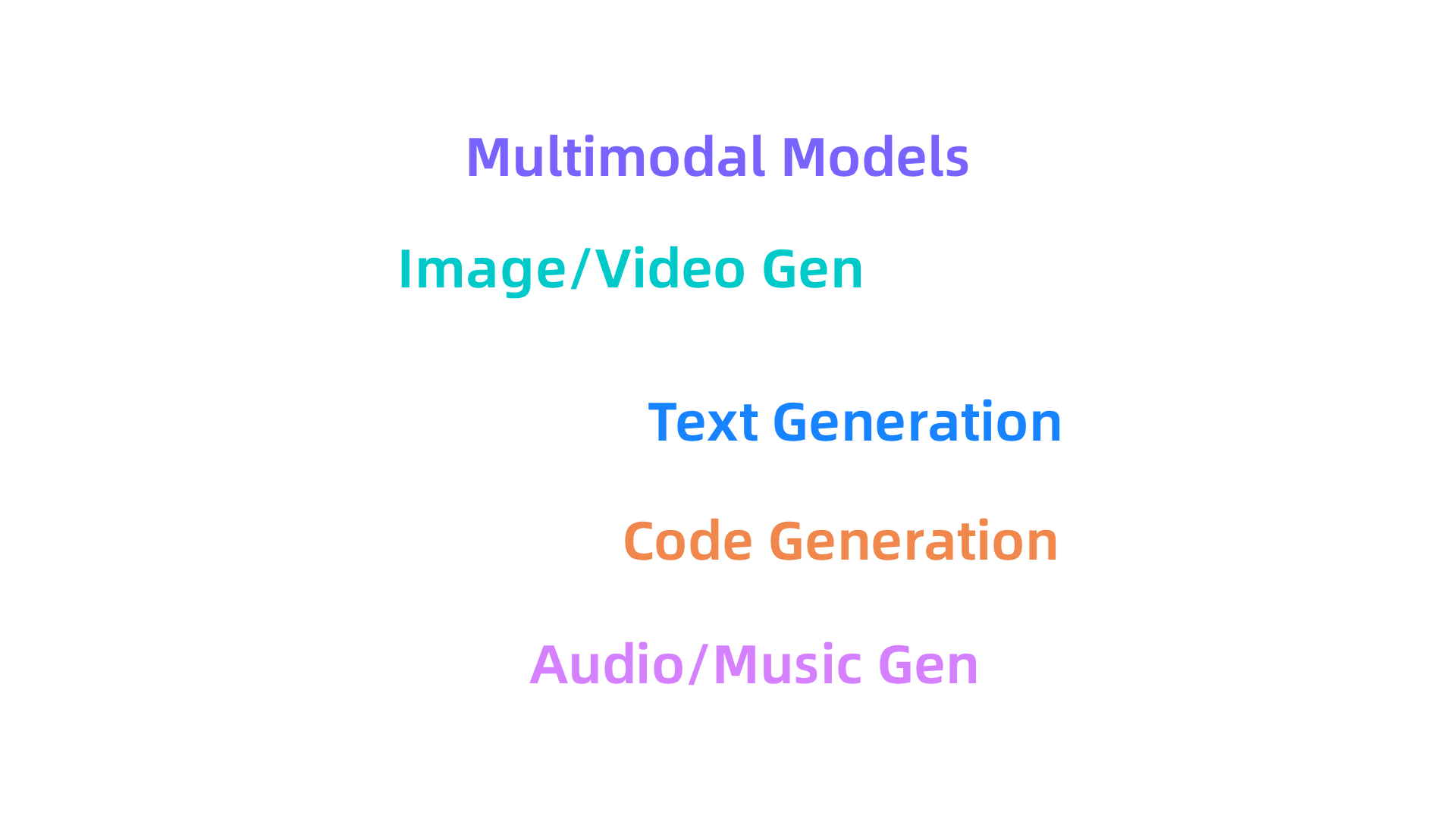
Now that you know how generative AI programs work, you might wonder what they can actually do. Before we jump into real-world uses and safe deployment, let's first look at the specific things these tools create. Their main abilities fall into a handful of areas, and each one comes with its own power and risk.
Text Generation
This is the most common capability. LLMs can write articles, emails, social media posts, and even entire books. They summarize long documents, answer questions, and chat with users. But they can also produce false information or biased content. If the training data had harmful ideas, the outputs will reflect that. As noted in this guide to top generative AI models for 2026, models like GPT-4o and Gemini excel at understanding context and generating natural language.
Still, you need to fact-check everything.
Image and Video Generation
Models like Stable Diffusion and DALL-E turn text prompts into realistic pictures. You describe a scene, and the AI creates it from scratch. Video generation is newer but growing fast. These tools help artists, designers, and marketers save time. The catch is that they can also create deepfakes or misleading visuals. Misuse is a real concern here. People can generate fake images that look completely real, which makes verifying truth harder.
Code Generation
Generative AI programs can write software code too. Developers use them to speed up programming, fix bugs, and translate code between languages. This is a huge boost for productivity. But the code can contain security flaws or hidden errors. Relying on AI-generated code without review puts systems at risk.
Audio and Music Generation
AI can now create voice recordings, sound effects, and even music. This helps podcasters, game developers, and musicians. However, voice cloning makes it possible to impersonate someone without their permission. That opens the door to scams and fraud.
Multimodal Models
Some advanced AI platforms combine multiple capabilities at once. A multimodal model can take in text and image inputs and produce a text or image output. For example, GPT-4o can look at a photo and describe it in words, or read a chart and answer questions about it. This makes these tools much more useful, but also harder to control. Each added modality increases the chance of unintended behavior.
Why Ethics Matters for Every Modality
No matter what kind of content these models create, the risks are similar. Bias creeps in from bad training data. Malicious users can twist the tools to spread misinformation. If you want to dive deeper, check out this discussion on how ethical data analysis builds trust in AI. Understanding the pitfalls helps you decide when and how to use generative AI safely.
So those are the core capabilities. Next, we will explore how companies actually put these tools to work and what it takes to keep them safe in the real world.
Applications Across Sectors
Generative AI programs are not just experiments in a lab. In 2026, they are actively reshaping how organizations work across every sector. From large corporations to government offices and university labs, these tools are becoming part of daily operations. Let's look at the main areas where they make a difference.
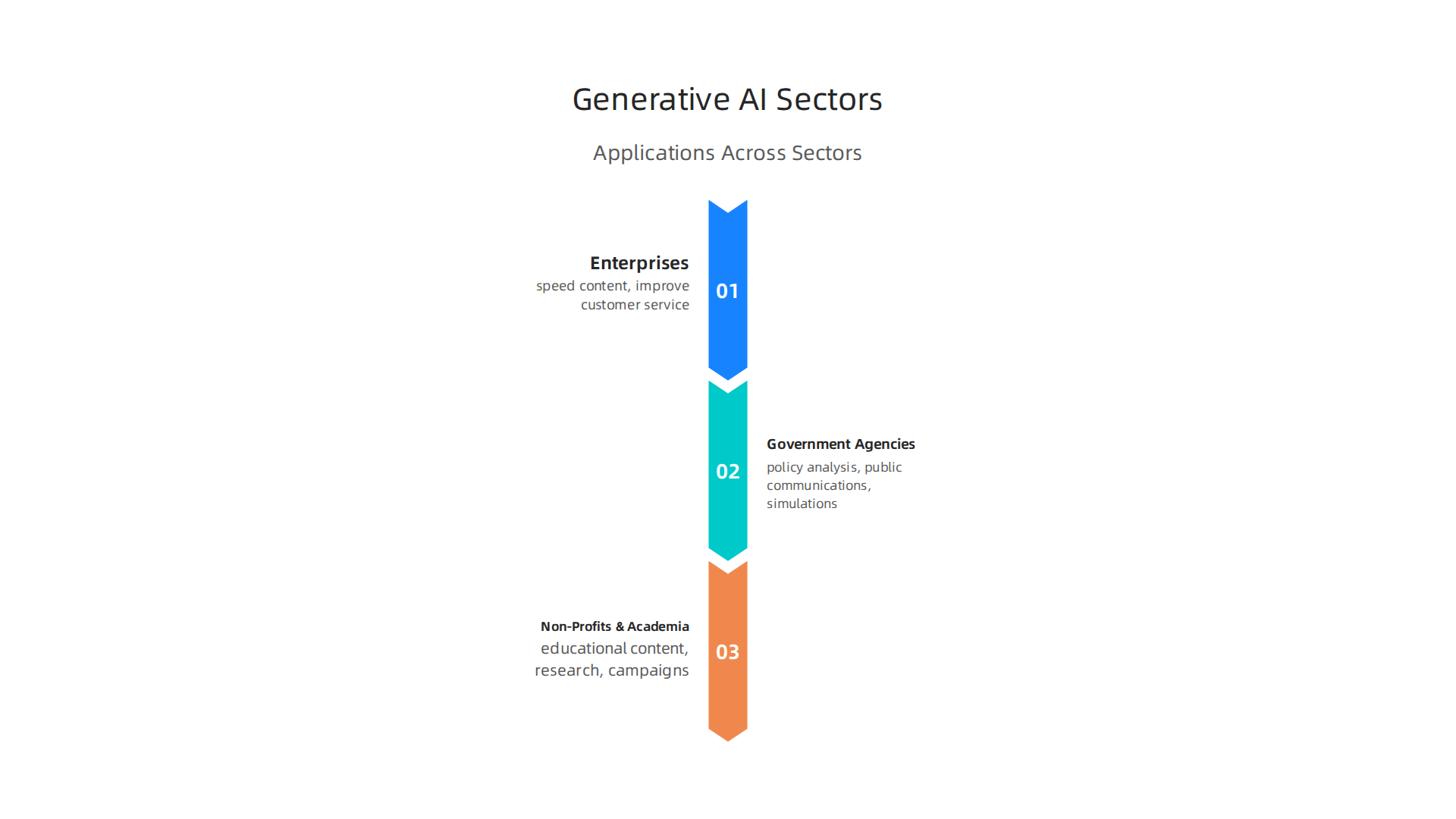
Enterprises
Private companies were early adopters, and they keep finding new uses. Businesses use generative AI programs to speed up content creation, improve customer service, and design better products. According to a 2026 survey covered in this breakdown of generative AI business use cases, 88% of enterprises now report measurable revenue impact from AI. Nearly a third say that impact is greater than 10%.
What does that look like in practice? Customer support teams use AI agents to handle routine questions and free up human staff for harder issues. Marketing departments generate ad copy, email variations, and social media posts at scale. Product teams use AI to brainstorm features and test ideas faster. Some companies are even using AI to create apps for internal use without needing a full development team. If you are building applications with AI yourself, you also need to think about trust. You can learn more in this practical guide on how to build apps with AI that earn trust through ethical data annotation.
Government Agencies
Public sector organizations are also stepping into the generative AI space, though more carefully. They use these tools for tasks like policy analysis, writing public communications, and running simulations. For example, some governments create digital twin models of their economy or city. They can test what happens if they change a tax rule or adjust traffic flow, all without real-world risk. AI also helps draft reports and summarize public feedback. The need for strong data protection is especially high here, because government systems handle sensitive citizen information.
Non-Profits and Academia
Non-profit organizations and universities are using generative AI programs to stretch their limited resources further. They create educational content, assist with research, and run advocacy campaigns. A teacher might use AI to build a custom lesson plan for a class. A researcher could ask an AI to summarize hundreds of papers in a few minutes. Advocacy groups generate compelling stories and visuals to spread their message. The lower cost of these tools makes them accessible to organizations that could never afford a large creative or research team.
Generative AI is no longer a future concept. It is here, and it is being used by all kinds of organizations to do real work. But deploying these tools successfully requires more than just plugging them in. You also need to handle the risks that come with them. In the next section, we will look at how to keep generative AI programs safe and trustworthy in the real world.
The Data Challenge: Ethical Data for Generative AI
So how do generative AI programs actually learn? They train on massive amounts of data. And the source of that data matters more than most people realize.
Many organizations still rely on scraped public data. They pull text, images, and videos from the open internet. This approach is fast and cheap, but it comes with serious problems. Scraped data is often full of bias, misinformation, and outright falsehoods. When you train a model on that kind of material, those flaws carry straight into the AI's outputs. The model does not know any better. As this research on the role of artificial intelligence in disinformation explains, AI systems can both create and spread false content at scale. That is a direct risk for any organization using generative AI programs built on low-quality data.
There is another hidden problem: synthetic drift. This happens when truth gets distorted as it passes through digital systems. A piece of information changes slightly each time it is copied, rewritten, or rephrased. Over time, the AI loses touch with what is real. The model starts generating confident-sounding answers that are actually wrong. This is especially dangerous in fields like healthcare. A study on generative AI and health misinformation found that AI tools can produce persuasive fake health stories faster than humans, and people often cannot tell the difference.
The solution is permission-based private data. Instead of scraping, organizations collect data directly from users who have given clear consent. This data is higher quality because it comes from real interactions with people who choose to share their truth. It also avoids the ethical problems tied to scraping. But it takes more work. Companies must invest in data curation, which means cleaning, organizing, and verifying information before it ever touches a model. They also need consent tracking to prove that data was collected ethically. And they need provenance tracking to know exactly where each piece of data came from and how it was processed.
If you want to see how some organizations are tackling these issues, take a look at this overview of how ethical data analysis builds trust in AI. It walks through real-world approaches for keeping data honest and traceable.
The bottom line is simple. Generative AI programs are only as good as the data they learn from. If you feed them trash, you will get trash out. By prioritizing ethical data practices, organizations can build systems that are more accurate, more trustworthy, and less likely to cause harm.

It takes effort, but it is the only way to deploy AI responsibly at scale.
Evaluating and Building Trust in Generative AI Programs
So you have clean, ethical data. Now what? The next question is harder. How do you actually know if a generative AI program is trustworthy? You cannot just assume it is. You have to test it, measure it, and prove it.
Think of it like hiring a new employee. You would not put someone in a customer-facing role without checking their skills, their judgment, and their track record. The same goes for AI platforms. They need the same kind of review before you let them run on their own.
The Five Pillars of Trust
Experts at places like UCSF have laid out a clear framework. They call it Trustworthy AI, and it breaks down into six major principles. The ones that matter most for evaluation are accuracy, fairness, transparency, robustness, and explainability.
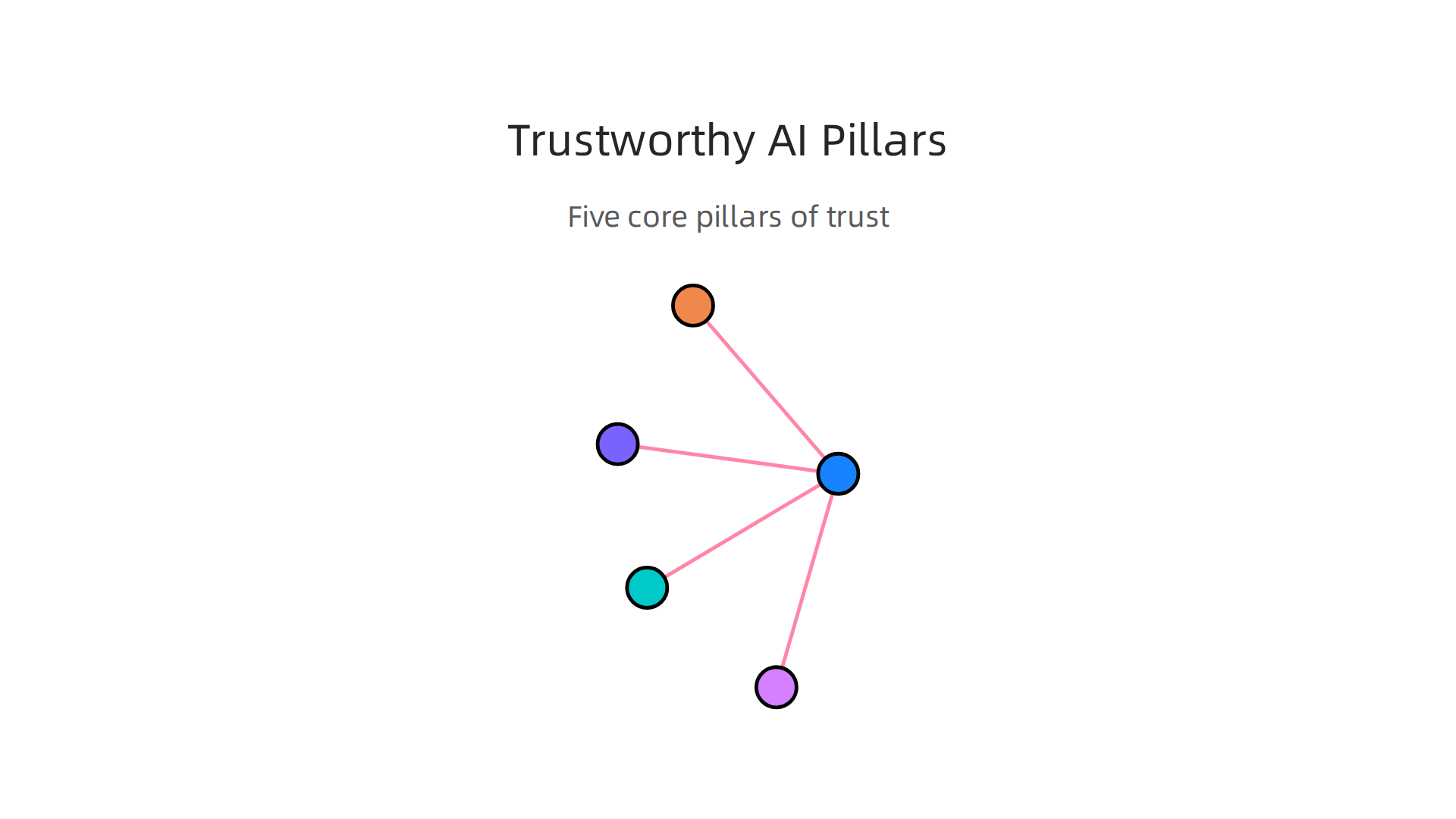
Accuracy means the model gets things right most of the time. Fairness means it treats all groups equally. Transparency means you can see how decisions are made. Robustness means the system holds up under stress. Explainability means you can understand why it gave a particular answer.
These are not just nice ideas. They are measurable. You can test a model for bias. You can audit its outputs for consistency. You can check if it produces the same answer when given the same input twice. As the research on Trustworthy AI principles for generative AI systems shows, organizations need to assess data for accuracy and fairness from the start.
Verification Frameworks Are Emerging
The industry is not leaving this up to guesswork. New standards are appearing. Model cards are one example. They are like nutrition labels for AI. A model card tells you what data the model was trained on, what it does well, and where it struggles. Bias audits are another tool. They check whether the model favors certain groups over others.
These frameworks are becoming expected practice. They give teams a repeatable way to catch problems before they reach users.
Continuous Testing and Human Oversight
Here is the thing. Trust is not a one-time check. You cannot test a model once and forget about it. Generative AI programs change over time. Data shifts. User behavior shifts. The model's outputs can drift without anyone noticing.
That is why continuous testing matters. You need automated systems that monitor for drift, bias, and errors in real time. But you also need human judgment. Machines catch patterns. People catch context. A good setup combines both.
If you are building your own system, you might want to explore how to build AI apps with ethical data annotation practices. The annotation layer is where many trust problems start or get solved.
The bottom line is simple. Trust is earned through proof, not promises. By measuring accuracy, fairness, transparency, robustness, and explainability, and by using structured frameworks like model cards and bias audits, you can deploy generative AI programs with confidence. You just have to keep checking.
Future Directions and Responsible Innovation
Evaluation is the foundation. But where is all of this heading in 2026? The next wave of generative AI programs is moving fast. The biggest shift is agentic AI. These are systems that do not just answer questions. They plan, make decisions, and take actions on their own.
Gartner predicts that by the end of 2026, one-third of all enterprise software will include agentic capabilities. That is a massive jump from almost zero just a few years ago. The masterofcode.com overview of generative AI trends explains that agentic systems represent the top strategic technology trend for 2025 and 2026.

At the same time, regulation is tightening. Different parts of the world are moving in different directions. The EU has the AI Act. The US has executive orders. China has labeling rules. Anyone building generative AI programs needs to keep up. Ignoring regulation is not an option anymore.
Human-Centered Design Matters More
Here is the thing. Technology can do amazing things. But if it does not serve human needs, it will not last. The teams that win are the ones that put people at the center. They use behavioral science to understand how people actually think and act.

They design systems that help people flourish, not just systems that produce content.
This is where responsible innovation really comes alive. It is not just about avoiding harm. It is about actively creating good. Generative AI programs should make people smarter, not replace them. They should reduce loneliness, not increase it. They should build trust, not erode it.
Invest in Governance Now
Waiting for someone else to figure out governance is a mistake. The smartest organizations are already building their own frameworks. They are creating audit trails. They are training their teams on ethical AI practices. They are thinking about the long term.
If you want to see how some of the biggest players are handling these challenges, look at how top AI companies grappling with data ethics in 2026 address synthetic drift and value alignment. The lessons apply at every scale.
The bottom line is simple. The future of generative AI is not just about better models. It is about better intentions. Better governance. Better alignment with what people actually need. Organizations that invest in trust and responsibility today will be the ones leading tomorrow.
Summary
This article explains how generative AI programs work, why the quality and provenance of training data matter, and what organizations must do to deploy these systems responsibly. It covers core model types (LLMs, GANs, diffusion models), major capabilities (text, image, code, audio, multimodal), and real-world applications across enterprises, government, and non‑profits. The piece highlights the data challenge—scraped public content, bias, misinformation, and synthetic drift—and argues for permission‑based private data, consent tracking, and provenance. It then outlines practical ways to evaluate trust through measurable pillars (accuracy, fairness, transparency, robustness, explainability), verification tools like model cards and bias audits, and continuous testing with human oversight. Finally, the article looks ahead to agentic AI, tightening regulation, and the need for human‑centered design and governance to ensure generative AI benefits people while minimizing harm.
Related Blogs
No Similar Blogs found
